
Europlanet Science Congress wraps up in The Hague

The first Dutch edition of the Europlanet Science Congress (EPSC) took place from 6-11 September in The Hague. A total of 1,203 participants (149 from The Netherlands) joined the congress in the wonderful Amare venue in the heart of The Hague. Aside from the insightful and inspiring scientific programme, various activities straddled the event with …

Life-detection chip to be tested during TU Delft PocketQube mission

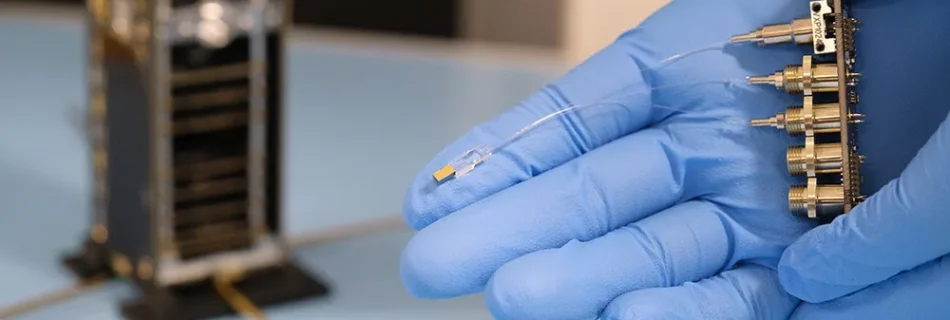
The Netherlands is a leader in both photonic chips and space technology. Now these two worlds meet, as two teams at TU Delft’s Faculty of Aerospace Engineering are joining forces. One develops miniature satellites, the other uses advanced photonic chips to search for signs of life. Together, they will bring a photonic sensing system from …

Rubicon grant for planetary pyroclastic density currents

No fewer than fifteen talented researchers who have recently completed their PhDs are being given the opportunity to gain valuable research experience abroad. The Rubicon round, organised by NWO, had a budget of over 3.1 million euros. One of the Rubicon grants has been awarded to Dr. Lonneke Roelofs (Utrecht University), who currently works as …

“We must resume the search for life on Mars as soon as possible”

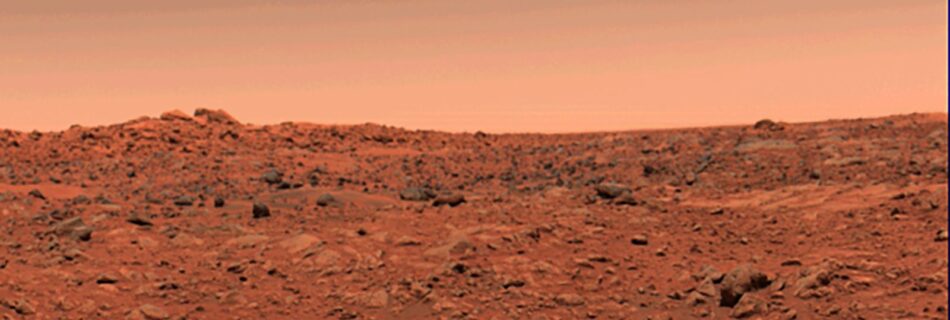
Exactly 50 years ago on 20 July 1986, Viking 1 landed on Mars. The spacecraft was part of the only mission ever to have searched for extraterrestrial life. With calls growing for humans to be sent there too, astrobiologist Prof. Inge Loes ten Kate is calling for a new unmanned life-detection mission. “Before our presence …

Missed opportunities in the search for extraterrestrial life

Suppose there are signs of extraterrestrial life and we have not yet been able to detect them. What does that mean? In the renowned journal Nature Astronomy, researchers discuss the consequences of these so-called false-negative results. “We are currently investing a great deal of money in missions that might need to be designed differently.” One of …

PRELIFE: Big questions with few answers

How, where, and when did life on Earth first emerge? These are three major questions to which many small, but no major, answers exist — questions that no single field of study can answer. That is why the national research consortium PRELIFE was established, a collaboration between universities and research institutes working together to find …

How does a 10,000-kilogram rock move on Mars?

A 10,000-kilogram boulder moving around and gullies that look suspiciously like rivers, not on Earth, but on Mars. Expertise Network postdoc Lonneke Roelofs explains it in a new video from the ‘Universiteit van Nederland’. For years, scientists have puzzled over this: is this evidence of water on Mars and does it mean that alien life …

New projects launched for international space missions including JUICE

Space and planetary research is teamwork. This week, the Netherlands Space Office NSO, in collaboration with the Netherlands Organisation for Scientific Research (NWO), funded new projects that promote collaboration between Dutch researchers working on international space missions. The awarded projects help scientists strengthen their leading role in international space missions and further develop space knowledge …

Planetary habitability and expertise network featured in Zenit magazine

In the February issue of Zenit, the national magazine for astronomy, meteorology and space research in The Netherlands, you can read all about planetary habitability, the exciting science taking place within the expertise network and the NPP. The postdocs of the Expertise Network and their colleagues have jointly written various popular science articles in this …

Three projects funded for studies of JUICE, Ganymede and Venus

Funding from the 2025 programme “Use of space infrastructure for Earth observation and planetary research (GO)” will be divided among nine research projects focusing on two themes: Earth observation research and research into planets and other objects within our solar system. NSO and NWO (the Dutch Research Council) have granted more than €3.3 million to …

Local organisation gearing up for EPSC 2026

After the mid-november site visit by EPSC and Copernicus representatives, the first steps are being taken for starting the local oraganisation activities for the Europlanet Science Conference in Amare, The Hague. The official website has been launched and will be updated with the developing ideas and plans in the months to come. The two co-chairs …